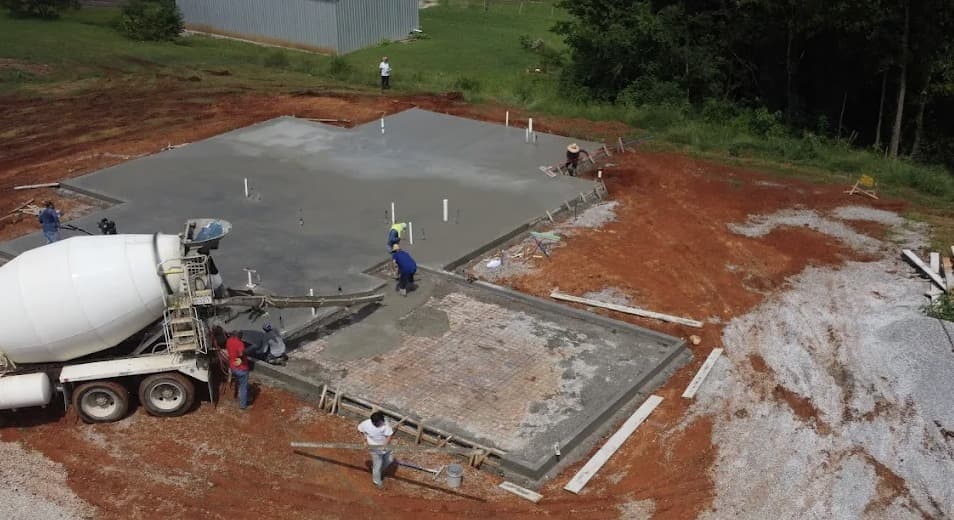
A well-built concrete patio is one of the lowest-maintenance features in a Hoover backyard — but “low-maintenance” doesn't mean “no maintenance.” Alabama's climate puts real demands on outdoor concrete: long, humid summers, heavy spring rain, pollen season that coats every surface in the Birmingham metro, and enough freeze-thaw cycles most winters to matter. A little seasonal attention keeps a patio looking new for 20-plus years instead of fading, staining, or cracking well before its time.
Clean it regularly — and the right way
Routine cleaning is the single most important habit for a long-lasting patio. A garden hose and a stiff broom handle most day-to-day dirt and pollen. For deeper cleaning — after Alabama's spring pollen season, or before resealing — a pressure washer on a low-to-moderate setting (holding the nozzle at least a foot from the surface) removes ground-in grime without etching the concrete or damaging a stamped pattern.
Avoid high-pressure, close-range blasting on stamped or stained concrete — it can wear down the texture and strip color faster than normal weathering would. If your patio has a sealer on it, a pressure washer set too aggressively can also strip the sealer itself, which is a good reason to reseal on schedule rather than waiting until it's visibly worn.
Reseal on a 2–3 year schedule
Sealer is what protects a concrete patio's color and surface from Alabama's UV exposure, humidity, and the acidic effect of pollen and organic debris breaking down on the surface. Most residential sealers hold up for roughly 2–3 years before they need reapplication — sooner in high-traffic areas or spots with heavy direct sun.
You'll know it's time to reseal when water stops beading on the surface and instead soaks in, when the color looks noticeably duller than when it was fresh, or when you can see fine surface wear in high-traffic paths. Resealing a patio is a straightforward, same-day job for most residential sizes — cheap insurance against staining and UV fading compared to what it costs to correct years of neglect. See our stamped and decorative concrete page for more on sealer types for colored and stamped surfaces.
Deal with stains before they set
Grill grease, red clay tracked in from the yard, tannin stains from leaves left sitting after a rain, and rust from patio furniture are the most common stains we see on Hoover-area patios. Fresh stains come up far more easily than ones that have had weeks to soak into unsealed or under-sealed concrete. A degreasing dish soap and a stiff brush handle most fresh grease and food stains; a dedicated concrete rust remover works better than a generic cleaner on rust spots. A properly sealed patio makes this whole category of problem far less likely in the first place, since most stains sit on top of the sealer rather than soaking into the concrete itself.
Watch drainage, especially on sloped Hoover lots
A patio that's properly graded — typically about a quarter-inch of slope per foot, angled away from the house — sheds water on its own. But on Hoover's hillier properties, water running down from a slope above the patio can overwhelm even good grading during a heavy storm, leaving standing water that accelerates wear and, in winter, creates ice. If you notice water pooling in the same spot after every rain, it's worth having the drainage evaluated — sometimes a small grading fix or drain solves it, and it's much cheaper to address early than after the standing water has caused settling or damage.
Address small cracks before they spread
Fine hairline cracks are normal as concrete cures and generally aren't a structural concern. But a crack that's widening, one edge sitting higher than the other, or cracking that follows a control joint incorrectly is worth having looked at. Left alone, water gets into a crack, and Alabama's freeze-thaw cycles — while less severe than colder climates — can still expand a small crack into a bigger one over a few winters. Most patio cracks are repairable without a full replacement; see our concrete repair and resurfacing page for how we approach it.
Keep an eye on tree roots and landscaping
Mature trees are one of the best features of Hoover's older neighborhoods, but roots growing under the edge of a patio can lift or crack a slab over time. If you notice a section starting to tilt near a large tree, it's worth having it evaluated before the movement gets worse — sometimes root pruning or a control joint addition solves it without disturbing the tree.
The short version
Rinse regularly, deep-clean and reseal every 2–3 years, handle stains quickly, keep an eye on drainage and any new cracking, and a properly built concrete patio will outlast almost any other outdoor surface option in Alabama's climate. If your patio is overdue for resealing, showing cracks, or you're planning a new one, request a free estimate from Concrete Pros of Hoover and we'll take a look.